Greetings! Welcome to Vol. 7, No. 11, 31 Oct 2002, of Exchange Messaging
Outlook, a biweekly newsletter about Microsoft Exchange and
Microsoft Outlook.
New Outlook developers site
It's with great pleasure that I announce the official launch of
OutlookCode.com, a new community site for Outlook developers. You
can discuss Outlook programming issues, post code samples, and
comment on other people's samples. No matter whether you're a
beginner or an expert, you're welcome to participate. No
registration is required to enjoy the forums and code samples at
http://www.outlookcode.com.
If you have my new book, Microsoft Outlook Programming: Jumpstart
for Administrators, Power Users, and Developers, you can also
download the sample code that goes with the book. We do ask that you
register to get that download; that will allow us to notify you if
we post a major update to the samples.
Office 11 beta
If you follow computer industry news at all, then you already
know that the Office 11 beta has begun. We have yet another
screenshot from Outlook 11 for you to enjoy at
http://www.slipstick.com/outlook/ol11.htm -- this time the new
calendar view that shows multiple calendars side-by-side. Notice the
checkboxes on the left. That's how you turn different calendars on
and off in this view.
As with most betas, participants are under a non-disclosure
agreement. But it's not too hard to find out if any of your friends
are testing Outlook 11. Use View | Options to look at the
Internet headers of incoming messages. Messages sent using an
Internet account will usually show the name and version number of
the sender's mail program. (HINT: Outlook 2002 is version 10.x.)
More Outlook 11 preview
If you missed our extensive preview of Outlook 11 in the last
issue of EMO, you can read it online at
http://www.slipstick.com/emo/2002/up021016.htm. From the demos
at MEC a few weeks ago, we also gleaned information about a few
other improvements:
The Address Book dialog is resizable, hopefully eliminating the
difficulty people have had in distinguishing among multiple
addresses for a single person.
WordMail is still the default editor, but the toolbar that you
see when composing a message has been greatly simplified.
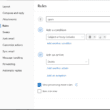
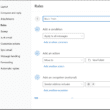
Another place where Microsoft hopes simpler is better is in the
Rules Wizard. It has been replaced with a Rules and Alerts dialog
with actions available to quickly create a simple rule that moves an
item to a folder or shows an alert.
Alerts pop up then disappear automatically when new mail arrives
-- similar to alerts from Windows Messenger -- showing each
message's subject, sender, and 1st 255 characters. Right in the
alert popup, you can delete or flag a message for later attention.
"Live attachments" is another new feature building on SharePoint
Team Services. As I understand it, you'll be able to attach files
from an STS document library, making it easier to collaborate on a
single copy of a document, rather than merging changes from multiple
reviewers.
You'll have an option to automatically compress pictures attached
to mail messages.
Many of the new features in Outlook 11, especially the new
interface, will also appear in Outlook Web Access on Exchange
Titanium.
OWA goodies
The New Utilities section below lists a bunch of new utilities
for Outlook Web Access. I saw HiPerExchange (http://www.seasidesw.com)
at MEC and was intrigued that they've developed a way to cache OWA
data on the client. It synchronizes in the background with an
Exchange 2000 (SP2 or higher) server, so when you're in OWA, you're
always working against the local cache. Since it requires a software
install on the client, this isn't the solution for road warriors who
depend on airport Internet kiosks. But it might be a solution for
people who need to access Exchange over low bandwidth or unreliable
connections from the same machine all the time.
Several other new products, all from
http://www.planetsoftware.com.au in Australia, add capabilities
to OWA that only the desktop Outlook client currently has --
assigning delegates, working with tasks, and setting permissions on
public folders.
Outlook Express and Outlook Contact sharing
Outlook MVP Diane Poremsky of CDOLive (http://www.cdolive.com)
let us know this week that the registry tweak that allows Outlook
Express to share Outlook 2002's address book also works in Outlook
2000 Corporate/Workgroup mode. You'll find details at
http://www.slipstick.com/contacts/oeshare.htm .
Speaking of OE, if it's your favorite tool for reading newsgroups
(especially the Outlook newsgroups where Diane and I and the other
MVPs hang out), you might want to get the latest version -- OE 6.0
SP1 Cumulative Update. This version adds a Ctrl+H toggle between
your regular newsgroup view and a view that shows only the threads
that you're participating in. It also allows you to delete a
newsgroup message from your local cache store, fixes the problem
with long URLs breaking across lines in plain text messages, and
ends the crashes that sometimes occur when you manually insert a
signature. The Microsoft Knowledgebase article at
http://support.microsoft.com/default.aspx?scid=kb;EN-US;q331923
has more details and the download link. Note that OE 6.0 SP-1 turns
on attachment blocking by default. You can turn it off in the
Tools | Options | Security dialog.
(And, no, this bit of news about Outlook Express doesn't mean
that we're going to start covering OE regularly. We just know a lot
of people use OE to access the Outlook newsgroups and though you'd
find these tips useful.)