|
This issue sponsored by: SonaSafe for Exchange Server ♦ Sperry Software ♦ Explorer View
Today's highlights:
Regular features:
What's new in Exchange 2007 Service Pack 1It's almost here. According to the latest Technet Flash newsletter,
Exchange Server 2007 with Service Pack 1 will be available for
download on November 30, 2007.
Exchange 2007 SP1 requires Windows 2003 servers to be upgraded to
Windows 2003 sp2. Service Pack 1 for the .Net Framework version 1.1
is also recommended prior to installing Exchange 2007 with Service
Pack 1, but is not required. See Microsoft KB 867460 for coverage on
the .Net Framework fixes for that update. Exchange 2007 SP1 is a
significant update to an RTM product accused of leaving expected
features out in favor of a more timely release date. Service Pack 1
reconciles some of those missing features with our expectations of
the product.
SP1 brings the administration of a couple of components back into
the user interface. The Exchange Management Console can now be used
to configure POP3 and IMAP4 server settings, including connection
control, port settings, and authentication settings. Public Folder
administration is also added to the EMC in SP1. For the original
Exchange 2007 release, these had to be managed through the Exchange
Management Shell (EMS).
One of the most anticipated new features for Exchange 2007 is the
addition of Standby Continuous Replication (SCR). This is similar to
other high availability features in Exchange 2007, Local Continuous
Replication (LCR) and Cluster Continuous Replication (CCR). SCR
shares the same technology but allows for multiple passive copies of
the Exchange database for remote standby servers. By itself, this is
not an automatic failover mechanism, but rather a manual process in
the event of a major failure of the source server. There are also
improvements to performance, monitoring and administration as well.
Exchange 2007 SP1 is required to install Exchange on Windows Server
2008. Several enhancements have been made to Exchange 2007 to
leverage advancements in Windows 2008. Microsoft has made an effort
to simplify clustering in 2008 while improving its performance and
scope. For example, Exchange 2007 SP1 on Windows 2008 allows for
cluster networks across multiple, even geographically dispersed
subnets. There are now many more options to Exchange clustering than
ever before. Windows 2008 also introduces support for IPv6 allowing
communication between appropriately addressed IPv6 devices.
SP1 for Exchange 2007 adds some Transport configuration and Send
Connector configuration options to the EMC. In Exchange 2007, there
was a free disk space requirement of 4GB, which a couple of people I
know found out the hard way. That requirement has been reduced to
500MB in SP1. This along with enhancements to the algorithm improves
Back Pressure resource monitoring.
In Outlook, messages can be assigned an importance or priority of
either Low Importance, High Importance or normal. With SP1, the
Exchange 2007 Transport role will now assign priority queuing to
messages assigned a high priority. Hopefully your CxO won't realize
this and send everything with the High Importance flag. Transport
can now better manage messages with Rights Management applied to
them using Outlook. The Active Directory Rights Management Services
(AD RMS) pre-licensing agent is included in Exchange 2007 SP1. There
are many prerequisites for its use, including applying SP1 to all
Hub Transport servers in the organization, but once these have been
met, configuration is just a matter of enabling the feature.
Improvements have been added for Edge Server synchronization and
Edge Server configuration cloning scripts. Unified Messaging
messages can now be better manipulated with Transport rules as well.
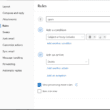
In addition to the updates of the UI for the legacy protocols
(POP/IMAP), Outlook Web Access and ActiveSync also enjoy some
improvements. OWA adds back some functionality present in Exchange
2003, including the ability for the user to create and maintain
rules through the OWA interface. OWA 2007 SP1 brings back a
surprisingly much-requested Monthly view and S/MIME makes a return
appearance. The selection of attachments that can be converted to
HTML in the message body, called WebReady Document Viewing, have
increased, adopting more of the Office 2007 file formats. OWA users
can also maintain personal distribution lists when accessing OWA on
a Client Access Server with Exchange 2007 SP1 installed.
With SP1, a default mailbox policy is generated for ActiveSync along
with improvements to policies. SP1 also adds the ability to remote
wipe a mobile device, which is a very valuable feature in many
industries.
We just scratched the surface of the changes administrators and
users will experience with Exchange 2007 SP1. If these improvements
and features do not inspire you, then maybe you might make the
transition to service pack 1 to get easy access to the new OWA
themes. SP1 adds Zune and XBox 360 themes, both of which are an
acquired taste.
You can read in more detail all the improvements and
additions to Exchange 2007 through Service Pack 1 at the Exchange
Tech Center at http://technet.microsoft.com/en-us/library/bb676323.aspx. For a less
formal, but often more relevant breakdown of individual features in
SP1 and other aspects of Exchange Server, be sure to read the
Exchange Team blog at http://www.msexchangeteam.com. They certainly
had me at EHLO.
Exchange server SP1 download
http://www.microsoft.com/downloads/details.aspx?FamilyId=44C66AD6-F185-4A1D-A9AB-473C1188954C
--William Lefkovics
An Outlook Add-in Bug
Outlook developer Ken Slovak has been working with Microsoft to
determine the cause of a bad crash in Outlook 2007 (and hangs on
Outlook 2003) caused by Apple's ITunes add-in for Outlook which
is used for calendar synching with IPods. Ken felt our readers
would find this information useful and interesting.
Because other vendors are using the same method ITunes uses,
there are other add-ins which will need to be fixed. We're
hoping by publishing the problem, vendors will check their code
and address the problem.
From Ken: "According to a Microsoft support engineer, Outlook
was designed to assume that all calls to the Outlook object
model are on thread 0. Some other often used DLL's also make
that assumption, such as the VB 6 runtime (MSVBVM60.DLL) which
is used in many of the Outlook add-ins currently available.
Apple sets up a new thread using a named pipe to do the calendar
synching but neglected to marshal the thread back to thread 0
for any calls to the Outlook object model and calls into the
object model instead on thread 7. This lack of a proxying back
to thread 0 then sets Outlook to call into MSVBVM60 to pass
along any events that have fired due to the object model access
(for example the ItemLoad event available only in Outlook 2007,
which fires on every object model access to any Outlook item).
This crashes Outlook due to the threading. The stack is read by
Watson and whatever is at the bottom of the stack gets blamed
for the crash, usually MSVBVM60 but also Kernel32 on Vista. The
next time Outlook starts up, whichever add-in was listed lowest
in the stack is blamed for the crash.
If no VB6 add-in is running then Outlook doesn't immediately
crash, instead it becomes unstable and might crash at any later
time, or it might just get hung in a deadlock between threads,
something that won't happen if all calls to the object model are
called in thread 0.
There is no possible defensive programming an add-in can do to
prevent another add-in from causing this problem. The problem
add-in must change its code to prevent the problem from
occurring."
Ken's contact at Microsoft is in touch with Apple about the
problem and we fully expect Apple to fix the problems. However,
other vendors are also doing the same thing and causing
problems, so this is a vendor by vendor problem that needs to be
addressed each time an offending add-in is discovered.
Ken adds "One way users can figure out which add-in is causing
the crashes is to disable all add-ins except the one being
blamed for the crash, then re-enable them one by one and waiting
for the crash to occur. When it does, you know which add-in
caused it. Getting the vendor to fix the problem may be more
difficult."
Steve Griffin plans to write about the problem on his blog and
will eventually get the information into the new Outlook 2007
Auxiliary Reference documentation, which is the best the site to
visit to reference best practices and to aid developers whose
add-ins are incorrectly being blamed for crashes. Microsoft may
contact vendors who show up in the Watson bucket crashes; Steve
has already identified at other vendors, aside from Apple, who
are showing up in those buckets.
SGriffin's [MSFT] WebLog
http://blogs.msdn.com/stephen_griffin/default.aspx
Microsoft Office Outlook 2007 Auxiliary Reference
http://msdn2.microsoft.com/en-us/library/bb905149.aspx
Autoaccept a Meeting Request using RulesAn interesting problem came up in the Microsoft public
newsgroups this week. Richard posts: "We have a specific user
requirement to auto accept meeting requests only from some
selected organizers, but I don't see any choice in Rule Wizard
for meeting requests. Does anyone have an idea, please?"
Of course I have an idea. Begin with a rule using the conditions
"from people or distribution list" and "uses the specified
form", choosing the Meeting Request form under Application
forms.
Since there is not an action to respond to meeting requests,
you'll need to use a script to accept it. Outlook MVP Michal
Bednarz offers this script, which you need to add to
ThisOutlookSession before creating the rule.
Sub AutoAcceptMeetings(oRequest As MeetingItem)
If oRequest.MessageClass <> "IPM.Schedule.Meeting.Request" Then
Exit Sub
Dim oAppt As AppointmentItem
Set oAppt = oRequest.GetAssociatedAppointment(True)
Dim oResponse
Set oResponse = oAppt.Respond(olMeetingAccepted, True)
oResponse.Display
End Sub
Open Outlook's VBA editor (Alt+F11), expand Microsoft Office
Outlook Objects and double click on ThisOutlookSession. Type or
paste the code into the module, then create the rule.
This was tested in Outlook 2007 and should work in older
versions which support the Run a Script action.
Exchange Server 2007 and Anti-VirusAntivirus for Exchange Server comes in two different
flavors, file-level antivirus and information-store antivirus.
More than likely, the antivirus package you purchase will
provide these capabilities as separate options.
A file-level antivirus program is responsible for scanning the
Exchange server itself, the files, folders, and volumes on the
actual computer-however it doesn't access the information stores
(the databases that contain e-mail and public folders). The
information-store antivirus program is responsible for scanning
incoming and outgoing email as well as the existing contents of
the information stores, however it doesn't access any external
files.
Having both information store and file-level antivirus is
important. While they both protect you against viruses, they do
so in different ways. The file-level antivirus stays aware of
the content of files on your server, but is not aware of what is
in your Exchange databases. The information store antivirus
cleans incoming (and outgoing) email, but is not aware of any
other potential viruses on your Exchange server's file system.
If I was required to choose one or the other, I would probably go
with the information store antivirus. Good server practices and
general safe-computing practices can usually protect a file
system. However, viruses and worms coming from the Internet
cannot be adequately protected against without some automated
assistance.
Choosing an antivirus vendor is akin to choosing a religion.
Folks have vendors that they love and vendors that they hate. No
single product is perfect. If you join a company after the
choice has been made, overcoming historical inertia may be
impossible because antivirus isn't cheap. However, if you have a
no-name antivirus solution, you may wish to make the effort.
Protecting e-mail is important.
The three 'old-timers' in the Windows Server antivirus world are
Symantec Antivirus (whose home versions are called Norton
Antivirus), Network Associates Antivirus (whose home versions
are called McAfee Antivirus), and Computer Associates (with
their eTrust solution). Some might claim that these solutions
are getting a big long in the tooth, and the current versions
try to do too much. Large memory footprints and poor performance
are common complaints you may read on mailings lists and
newsgroups.
The 'middle-aged' solution is Trend Micro. It still does a fine
job.
However, in recent years there are more solutions available.
Some of which are loved by their users. One of these is NOD32 by
Eset Software. Many people currently say that it is the best
anti-virus solution available, bar none. It has the smallest
memory footprint available along with the best performance.
There are certainly many other solutions out there.
However, there is another solution you should keep in mind. In
the last two years, Microsoft has purchased two antivirus
companies. Sybari, which was known for its super-fast Exchange
information store scanning (and for providing multiple
anti-virus engine plugins), and GeCAD, which was a Romanian
anti-virus software company.
These two products have been rolled into Microsoft's Forefront
series of products. While they may not be the best right now, you shouldn't underestimate Microsoft when they enter a market.
-- Michael B. Smith, MCSE/Exchange MVP
|