|
|
This issue sponsored by: Sherpa ♦ SonaSoft ♦ Sperry Software
Today's highlights:
Regular features:
Outlook's High CPU Usage
A recent (and long) thread in the Microsoft newsgroups began like this:
"I wrote about the Outlook 2003 CPU usage problem a while back and so far have
not found a solution. "
The user moved everything to a new *.pst and it seemed to help. He redid the
sync settings for his phone and Outlook began hogging the CPU. It looked like
Windows Mobile Device Center is the culprit but removing the phone didn't reduce
the CPU usage. He upgraded to Outlook 2007 and the high CPU usage continued.
Thoroughly frustrated, he said "I've tried everything I can find in this NG on
this problem to no avail. Looks like Outlook just will not work on Vista Home
Premium properly no matter what I do."
I knew this was wrong as Outlook works perfectly fine on all versions of Vista
for many, many people. I ask which add-ins he has installed, since many problems
are caused by add-ins. After several messages back and forth, the user mentions
all add-ins except OutlookAddin are disabled and CPU usage is still high.
Ah, OutlookAddin is the clue I needed to solve the problem. This tells me the
user has a Dell and it has Media Direct installed. We see a number of complaints
relating to this add-in - the most common is that it causes meeting requests to
recur. It is also responsible for the creation of calendar folders in My
Documents when users save attachments. When someone mentions either problem, I
don't need any other information and often begin my reply with "My crystal ball
tells me you have a Dell..."
High CPU usage is not mentioned as much and I often forgot that its caused by
the Media Direct add-in. This could be because users have come to expect high
CPU usage from Outlook, only a small subset of Dell owners are affected, or
because other add-ins, including BCM, can turn Outlook into "a slug" (with
apologies to slugs).
To disable it, either uninstall it from Control Panel, Add/Remove programs or
disable it in Tools, Trust Center, Add-ins. Select COM Add-ins at the bottom of
the dialog and click Go. Remove the check from the Outlook Setup Addin
(outlookaddin.dll). In Outlook 2003, go to Tools, Options, Other tab, Add-ins to
disable it.
Recurring Meeting Bug
http://www.slipstick.com/problems/recurringmeetings.htm
Exchange High Availability - On The Cheap
by Michael B. Smith, MCSE/Exchange MVP
For many years, at least since Exchange Server 5.5, if you needed high
availability for an Exchange Server - you built a cluster. Call it a Wolfpack
cluster, a NLB cluster, a Windows server cluster - whatever. They are all the
same, just by any other name.
Any Windows-based cluster requires, at some level, at least one computer system
which is ready for at least one of the other systems to fail. Whether active
(currently taking transactions from clients) or passive (sitting there waiting
for another computer system to fail). This has meant, in the past, that to
properly size your cluster members for performance, you need to oversize
(super-size?) your cluster members. As of Exchange Server 2003, Microsoft
required all Exchange server clusters to have at least one passive member - that
is, at list one cluster member that was not doing anything else in the cluster.
In Exchange Server 2007, Microsoft has enabled a technology known as Continuous
Replication. They have enabled this in three different ways (as of Service Pack
1). Those three ways are: Cluster Continuous Replication (CCR), Local Continuous
Replication (LCR), and Stand by Continuous Replication (SCR). Each of these
replication methods are ways of creating (almost) real-time versions of your
Exchange database.
In all versions of Exchange server prior to 2007, the log files that Exchange
produced are exactly 5 MB in size (and I mean exactly - 5,242,880 bytes). In
Exchange Server 2007, those log files have changed to exactly 1 MB in size
(1,048,576 bytes). This change was made, primarily, to support the continuous
replication features.
All of the continuous replication methods depend on log shipping. Log shipping
is the process of taking each Exchange transaction log, once closed, and
transferring it to a continuous replication destination, applying that log file
to a destination copy of an Exchange database, and then waiting for the next
transaction log. This process allows for a remote destination to have a
close-to-current copy of your local Exchange database. A real restriction is
that any of the continuous replication methods only work if you have a single
Exchange message store within your Exchange storage group.
The initial process of creating a continuous replication destination includes
'seeding' the destination copy. After the initial seed, the copy is kept up to
date by applying the log files from the source. In order to keep copies more
close to current is the (one of the main) reason why the log files were reduced
in size. Any continuous replication solution requires that a storage group only
have a single mailbox store associated with it.
CCR is the process of taking a copy of the local database, from a cluster, and
sending it to a REMOTE destination. LCR is the process of taking a copy of the
local database, from a non-cluster, and sending it to a LOCAL destination. SCR
(new in Exchange 2007 service pack 1) is taking a copy of a local database, from
a non-cluster, and sending it to a REMOTE destination.
All of these (CCR, LCR, and SCR) can provide improved high-availability to
Exchange 2007 installations. In many cases, they can replace third-party
products that provide similar capabilities, at a lower cost. If you want to know
how to implement these - let us know!
Using Deferred Delivery
Do you accidently hit send in the middle of composing a message? Have you ever
compose an email and sent it, then minutes later regret sending it and attempt
to recall it? Would you like to send a reminder to your co-workers before a
meeting but always seem to forget? If so, deferred delivery is for you.
Outlook offers two methods for deferring delivery. One method holds messages for
a short period of time and is useful when you need to delay sending a message
for a short period of time; the other sends the message at a specific date and
time.
The first method uses a rule to delay sending the message for up to 120 minutes.
This is useful if you think you might want to edit the message before sending it
or if you are in the habit of accidently hitting Send. It also works 100% of the
time, unlike Recall. You can use criteria to control which messages are held;
for example, you might want to hold messages to an important client or your boss
but not to others.
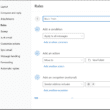
To configure a delay rule, open the Rules dialog
- Create a 'Check message after sending" rule.
- Either choose the conditions for the rule or click Next if you want it to
apply to all messages.
- Choose "defer delivery for a number of minutes" on the actions screen and
enter a number between 1 and 120 for the number of minutes.
- Enter exceptions if necessary then click Finish.
Now every message meeting the conditions (or all messages if no conditions were
selected) will be held in the Outbox for the desired amount of time.
If you use Exchange server or have Outlook configured to Send immediately, the
message will be sent as soon as the delay expires. If you send mail on schedule,
such as every 10 minutes, it gets sent on the next scheduled send after the hold
expires.
The second method to defer delivery holds mail until a specific time and date.
You can use this to send reminders but you'll need to have Outlook open at the
appointed time, unless you use Exchange server in "classic online" mode.
To use this method, select the Options dialog before sending the message and set
a time and date in the Do not deliver before fields. Remember, Outlook needs to
be running at the appointed time for the message to be sent if you use a POP3,
IMAP or cached Exchange account. You can't use it convince people you arrive at
work early or work late- the time you sent the message to the Outbox will be
stamped on it.
These methods are best suited for individual messages. If you need to add a
delay to a mass mail or mail merge, there are several add-ins available that may
meet your needs better. They're listed at
http://www.slipstick.com/addins/mail.asp.
An e-mail message may not be delivered at the scheduled time when you enable the
"Do not deliver before" option in an Outlook 2003 message
http://support.microsoft.com/?kbid=918824
Exchange Quick Tip: Change OWA Address
To change the URL that is used for OWA, for example , from
https://domain.com/exchange to https://domain.com/ or https://mail.company.com
you need to set up redirection in IIS. (You will, of course, need to have the
domain name properly configured in DNS. )
- Open IIS Manager, and navigate to Web Sites/Default Web Site
- Right-click Default Web Site and choose Properties
- Select the Home Directory tab
- Choose "A redirection to a URL" option
- In the "Redirect to" field, type /exchange (or the path currently used)
- In the "The client will be sent to:" list, select "A directory below URL"
Click Ok and return to IIS manager. Now when users can type the URL for this IIS
server, IIS will redirect them to the /exchange subfolder.
Outlook Quick Tip: Missing Appointments in the Calendar Printing Assistant
If you don't see all of your appointments when you use the calendar printing
assistant, you may need to open the appointments in Outlook and make a slight
change. Based on my observation, it looks like items created in either older
versions of Outlook or in other applications and synced to Outlook aren't
visible in the Calendar Printing Assistant until you "touch" the item and cause
it to update.
|
 |
|
New Utilities
|
ActiveSend 2007
http://messageware.com/products/exchange-2007/OWA-Office-2007.php
Messageware ActiveSend 2007 enables Microsoft Office & other desktop
applications to use OWA like Outlook. Send files with one-click File SendTo/MailTo
commands. Toggle between OWA, Outlook and Outlook Express. Attach multiple files
to an OWA email in seconds. Free evaluation software available.
Data Fields Manager for Outlook
http://www.datafieldsmanager.com
Data Fields Manager for Outlook allows users to perform mass modifications to
contact fields in Outlook. You can add, remove, capitalize, build, clear, paste,
trim and much more with the click of a button. Compatible with Outlook 2000,
2002, 2003, and 2007. Version 6.1
Message Pad for Outlook
http://www.emercury.co.uk/message_pad.htm
Message Pad for Outlook replaces phone message pads, Post-It Note or bits of
paper for your phone messages. Messages can be picked up remotely using email
enabled mobile devices. Workgroup management to allow office groups to maximize
productivity (requires Microsoft Exchange). Fully integrated with Outlook. Free
evaluation.
Mirracrypt Encryption for Outlook
http://www.mirracrypt.com/
Mirracrypt integrates seamlessly with Outlook 2003 & 2007 to provide powerful
Sender-to-Receiver Email Encryption that is convenient and easy-to-use.
Mirracrypt is the perfect add-on program for any Outlook user who requires
privacy & security. |
 |
|
Updated Utilities
|
Category Manager
http://www.vboffice.net/product.html?pub=20&lang=en&cmd=detail&id=2006063
Using Category Manager's Quick-Cats you can assign categories as
fast as lightning. You don't have to search a long categories list.
You can rename any of the categories at any time - and rename
categories for all of your folders at the same time. Categories can
be exported and be made available for others. Import collections of
categories and decide yourself whether they should overwrite
existing entries or be added to them. Version 3 Free Trial
available.
Mobiliti
http://www.mobiliti.com/products.html
Use Mobiliti to synchronize and backup files from any source to any
destination including external drives, FTP, or WebDAV locations.
While not limited to backing up your Outlook data, you can use it
for unattended and transparent backup and synchronization of large
Outlook files in seconds, including at startup, shut down, when
logged to the network, or any time, via any type of connection. The
real time synchronization ensures that source and destination files
are always in sync. Basic, Plus and Enterprise versions available.
Version 7.1
OfficeCalendar
http://www.officecalendar.com/
Share Microsoft Outlook calendar, contact, and task information with
this affordable Exchange alternative. Makes Outlook calendar sharing
and Outlook group calendar scheduling easy. Works with Microsoft
Outlook 2000, 2002, 2003, and 2007. OfficeCalendar creates Outlook
calendar share folders under each users main calendar folder along
with a Outlook group calendar. Free trial is available. |
 |
|
New Exchange Knowledge Base Articles
|
Description of the updated IMailBoxStore::MoveMailbox method in Exchange 2000
Service Pack 3 or in Exchange 2003 Service Pack 2
http://support.microsoft.com/?kbid=925389
Error message when you enable the "Show in Groups" option for a folder that
contains thousands of e-mail messages in Outlook: "Outlook is retrieving data
from the Microsoft Exchange Server <ServerName>"
http://support.microsoft.com/?kbid=948828
Mail flow to certain domains does not work when you run Exchange Server 2007 on
a Windows Server 2008-based computer
http://support.microsoft.com/?kbid=951291
The Inetinfo.exe process crashes on an Exchange Server 2003 front-end server in
certain configurations
http://support.microsoft.com/?kbid=950157 |
 |
|
New Outlook Knowledge Base Articles
|
Description of the Outlook 2003 hotfix package: April 15, 2008
http://support.microsoft.com/?kbid=951678
Description of the Outlook 2003 hotfix package: April 22, 2008
http://support.microsoft.com/?kbid=951982
In Office Outlook 2003, you cannot open Macintosh binary attachments after you
install security update MS08-15
http://support.microsoft.com/?kbid=951679
The Outlook Add-in for Project Server 2007 no longer loads when you uninstall
and then reinstall the add-in
http://support.microsoft.com/?kbid=951648 |
 |
|
More Information
|
Click here
to subscribe to the Exchange Messaging Outlook newsletter.
Exchange Messaging Outlook Newsletter
back issues
ISSN 1523-7990
Copyright 1996-2010, Slipstick Systems and CDOLive LLC. All rights reserved.
|
|