|
Greetings! Welcome to Vol. 11, No 18. of Exchange
Messaging Outlook, a biweekly newsletter about Microsoft Exchange
and Microsoft Outlook.
Today's highlights:
Regular features:
Message RecallI'm frequently asked about message recall, specifically, they want
to know why it doesn't seem to work at all.
Several things need to happen for recall to work. You need a blue
moon on a warm starry night, then throw a pound of salt over your
left shoulder… and once you do all that, it still probably
won't work. Yeah, I'm just kidding on those steps, but I’m not
kidding when I say that recall really only works under certain very
specific conditions.
The first and most important is that it only works on Exchange
server and only if the sender and recipient are in the same server
organization. It won’t work on messages that are delivered
through the SMTP connector.
Assuming this condition is met and both the sender and recipient are
using the same Exchange server, the recipient can't be sitting at
Outlook reading their e-mail since recall fails once the message is
opened. They can have Outlook open to the mailbox, but since it
takes up to two minutes for the recall to automatically process,
they are more likely to read the original message before it is
recalled. If by chance they happen to read the recall before the
message, it will process and remove the message.
The best solution? Don't use recall. If you have the habit of
accidently sending messages before they are finished, add some
random characters to the CC field. They won't resolve and you'll be
able to cancel the send. Some users purposely misspell the first
word in the message, but I feel this is risky and you can end up
sending a message with a misspelling. Entering random characters in
the To field will stop the send every time, unless a contact has a
name or email address that uses that string.
If you send messages but have second thoughts soon after sending a
message, create a rule to hold messages in your Outbox for several
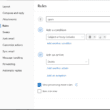
minutes before sending it to the server. In Rules and alerts, choose
an After sending rule and set the Action to defer delivery by a
number of minutes, up to 120 minutes. Either of these methods is
much better than sending a recall that probably won’t work.
Automatically Empty Deleted Item FolderDo you want to empty your Deleted Items folder automatically? You
can use an option built into Outlook to empty the deleted folder on
exit (Tools, Options, Other tab, Empty the Deleted Items folder upon
exiting), but it can slow down the exiting process. It's an all or
nothing process - if it's enabled, it will empty the folder every
time you close Outlook. You can't have it only delete items
that are older or over a certain size. And if you accidently delete
something you need to keep and close Outlook before retrieving it
from the Deleted Items folder, its history. You can't recover
it unless you use Exchange server and deleted items recovery is
enabled.
Fortunately, there are other options. The first, which any Outlook
user can use, is AutoArchive. Set it to run every few days (or even
daily) and configure the Deleted Items folder to have items older
than 1 day old (or more) deleted. You can also configure the Junk
Email folder to be emptied every few days as well.
The second option is used with Exchange server accounts only and is
controlled by the Exchange administrator, not the user. The
administrator can configure Mailbox Manager to delete items from any
folder by age, size, or both, and set exceptions for specific
message classes. This is a good way to insure the Deleted
Items and Junk Email folders are emptied routinely or that messages
with large attachments are removed from the mailbox once they age.
As with Autoarchive, each folder can have different settings, for
example, Deleted items are deleted if older than 2 days, but Junk
email stays for 5. Typically, Mailbox manager is run once a week,
often on Saturday or Sunday night. Because different mailbox
manager policies can be applied to different groups of users, it's a
good way to keep mailboxes small when a user is off work an extended
period of time, without disabling or deleting their mailbox.
Configuring AutoArchive:
Open the AutoArchive dialog by going to Tools, Options, Other,
AutoArchive. Enable AutoArching every 14 days. The default is 14
days, but you'll probably want to lower it to 5 or less days.
You can leave the other settings the default, but note that if you
click the 'Apply these settings to all folders' button, it will
apply the settings to all folders, including calendar or any folder
you may store old important messages in. You'll need to disable
autoarchiving or change the archive period on these folders
individually.
Next, right click on the Deleted Items folder and choose Properties,
then AutoArchive tab. Choose the option to 'Archive this folder
using these settings' and pick a number. My preference is to set
AutoArchive to run every 2 to 3 days and delete items older than 2
or 3 days. This provides some insurance, should I need to recover
something from either folder.
For Deleted Items and Junk E-mail folders, you'll want to select
the option to permanently delete the items. If you applied the
Autoarchive settings to all folders, you may want to change the
setting for the calendar or other folders.
Configuring Mailbox Manager
Open the Exchange System Manager's Recipient Policies container. You
can add a mailbox manager policy to an existing address policy or
create a new recipient policy, keeping in mind that only one policy
is applied to each mailbox. To create a new policy, right
click on Recipient Policies and choose New, Recipient policy. To add
a Mailbox manager policy to an existing Email address policy, right
click on the policy and choose 'Change property pages'.
Add a checkmark beside Mailbox Manager Settings and click OK.
Create a filter on the General tab and select the folders and edit
the size and age conditions as needed on the Mailbox manager tab.
Admins can apply the policy to any folders in the mailbox, provided
they know the folder name and path. To do so, click the Add button
and enter the folder and path in the form of 'Inbox\subfolder' and
set the size and age limit.
Enable mailbox management and configure the times it runs from the
server's property sheet by browsing to the server under the
Administrative groups container.
Tech Support WoesIt's been a frustrating month. I planned to move to a new location
and had phone service and DSL turned on well in advance of the move
so I could be sure it was working correctly before moving my
servers. It worked great on nice days, but at night or on rainy
days, the DSL kept cutting out, connecting then almost immediately
disconnecting. The few times it stayed connected, the speed was well
below the daytime speeds as reported by the modem interface. Around
9 am it would start working fine again until early evening, except
when it rained, when it didn't work during the daytime either. By my
logic, when it didn't work on rainy days or on damp, foggy fall
nights, it was because of water in or on the lines. It made a lot of
sense to me, but not to tech support.
I called CenturyTel support and told them it seemed like it was
water-related since it happened on rainy days and at night. They
said they'd send a repairman out to check my lines. I wasn't around
when he supposedly came out, but when DSL still didn't work right at
night, I called tech support again. They said the lines checked out
fine and it was something inside, maybe the security system, the
satellite dish, a light or appliance only on at night. The first two
are not installed and I insisted it was weather related, not
electrical interference. They offered me two options: pay $140/hr
for a repairman to check their lines or $400/mo for a T1 with
guaranteed uptime and they'd test them for free. I called Time
Warner instead.
When I called to have the DSL disconnected because daytime-only
business class DSL wasn't meeting my needs and they wouldn't fix it,
the customer service agent talked me into trying tech support one
more time. Once again, I told tech support the symptoms and
suggested the problems seemed to be weather related. The response
this time? "The modem is bad. It's still under warranty; we'll send
a new one." My reply: "It better be under warranty, you sent it to
me 30 days ago. Is it common for modems to fail at night or on rainy
days but work fine during the day?" After a very long pause he
decided maybe another repair ticket was in order.
I made sure I was around when the repairman arrived to check the
lines. He opened the green box out by the street and guess what he
discovered… WATER! Water pooled around the base and the plastic
shield that is supposed to prevent shorts was loose and wet. Why oh
why didn’t tech support listen to me the first time.
The repairman also told me the modems have a very low failure rate
but that doesn't stop tech support from replacing them and hoping
the problem goes away for the customer. I already knew that; I threw
out a box full of modems Sprint sent me over the years. I kept them,
just in case a modem actually failed (but none did). I suppose I can
be happy they didn't tell me to reformat or "write zeros", the tech
support cure all.
Now that the box is dried out, the DSL works fine but it's still
getting disconnected as soon as Time Warner installs their service
early next week. Here's to hoping Time Warner works as advertised
all the time.
|