Exchange 2007 beta 2 is now available to the public, both as a
download or shipped on DVD for a small shipping and handling fee and
includes Forefront Security for Exchange Server Beta (formerly
Antigen). Exchange 2007 beta is available in both x64 and x32
versions, however, the x32 version is for test environments only.
Exchange 2007 beta 1 was difficult for many administrators to use
because it lacked a GUI for many of the things an administrator
would want to do, leaving them to use the Exchange Management Shell
to script what should be simple tasks. Fortunately, beta 2 has a GUI
so those administrators who are more comfortable using point and
click to configure Exchange can do it easily, until they get a
better handle on scripting.
Exchange 2007 has a new interface - system manager is gone, replaced
by the management console GUI and shell. It's definitely different
than the Exchange System Manager we're used to. The console is a bit
slower than ESM, so you'll want to learn the script commands and
syntax and create a library of frequently used scripts. The GUI
displays the scripts used for commands, making it easier to learn
the commands and administrators can copy the scripts to their script
library for future use.
Exchange 2007 has a lot of new and improved features, including much
requested improvements to Out of Office Assistant. OOF messages can
be scheduled to begin and end on specific dates and times,
eliminating the need for a user to remember to set up the OOF
assistant before leaving the office and users will be able to set or
disable Out of Office messages using a mobile device.. Also
supported is a different out of office message for external
recipients.
Improvements to Exchange ActiveSync makes it easier than ever for
mobile devices to sync with the mailbox. Exchange 2007 supports
unified messaging, delivering voice mail and faxes to user's Inbox.
Users will be able to call in from any phone to listen to their
email or appointments and if they are at their desk, can listen to
voice messages through a telephone handset, instead of computer
speakers.
Outlook Web Access (OWA) users can schedule Out of Office messages,
search the Global Address List (GAL) and use the Scheduling
Assistant to book meetings. LinkAccess provides access SharePoint
documents from OWA using RPC over HTTPS and eliminating the need for
a VPN or tunnel. WebReady Document Viewing allows users to read
attachments in HTML even if the application that created the
document is not installed locally.
Outlook 2007 clients can use AutoDiscover to configure Exchange
account, meaning users only need to know their email address and
password when setting up a profile.
Exchange 2007 Beta 2
http://www.microsoft.com/exchange/preview/default.mspx
ForeFront Security for Exchange Server
http://www.microsoft.com/forefront/serversecurity/exchange/download-beta.mspx
Exchange Server 2007 Scripting Contest
http://www.microsoft.com/technet/prodtechnol/exchange/2007/scriptcenter.mspx
Enter and win a trip to the Exchange 2007 launch.
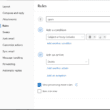
This week's feature is the Out of Office Assistant. The Exchange
team heard the complaints about the out of office capabilities
loud and clear. Yes, you can now schedule Out of Office
Assistant to run at a specific time, down to the minute you'll
leave and return, setup or disable OOF using OWA, and send a
different out of office message to external recipients. You can
even choose to send OOF only to your contacts.
The best news? It's supposed to work with Outlook 2003 too.
One frequent complaint about Outlook's calendar is the limited
number of All Day events you can see in Day and Week views. If you
have a lot of all day events, such as in a group schedule, you need
to switch to a table view to see all of them. Exactly how many
events are visible is based on the screen size - both in resolution
and Outlook's window size. Using high resolution screen settings and
turning off Outlook's toolbars and the status bar displays more
events, but it is not practical to keep changing the settings and
disabling the toolbars.
Another problem, also most common with group schedules, is that you
are limited to seeing 6 appointments in any time period. Unlike the
all day events problem, there is no workaround you can use to see
more than 6 (other than using a table view). Six is the maximum and
it's set in stone.
Outlook 2007 addresses both of these issues. The first was solved by
adding a scroll bar to the Events section at the top. You can still
control how many are shown without scrolling by tuning off the
toolbars and increasing the screen resolution if you want, but it's
no longer necessary, just scroll down the list. The 6 appointment
limitation was removed completely; you can see all of the
appointments in any time period. You may not see much of the
subject, but at least you'll know how many appointments are
scheduled.